Posts

Showing posts with the label Spanish

Searching for the light -- getting away from kitch

Image
Sunset over desierto de las Palmas and Benicassim, with the unique pinkish red of the local stone Dear Citizens of the World! My motivation for this month will in part be to search for the light that makes the Mediterranean so special. I had almost forgotten about it because it is either raining or too hot to venture out. Today's ride was hampered by a summer storm. Luckily, I was able to watch it from nearby. The picure below shows the rain over part of the sea. A nice tone of pinkish-orange contrasts well with the dark-gray clouds. Just to the right, the sky was blue! Click to Enlarge... Enjoy the rain! The United Statesian
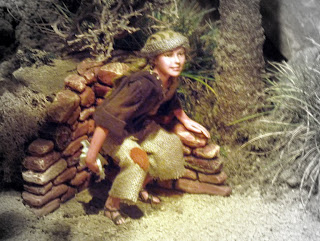
Nativity Pooper -- Spanish Tradition

Image
Dear Citizens of the world, After finding this figure in a large nativity scene ( Belen in Spanish) in a small church in the Pyrenees. I immediately decided to find out more and write a blog. The cagón could be translated as the pooper, crapper or sh!tter. I will use the translation of " pooper " for this post. This image was shocking to me because I am used to the traditional scene of the happy family, three kings, angels, some farm animals, etc. Apparently, the tradition of the Nativity Pooper comes from the Catalan region of Spain. The Catalan name is " Cagagner " (click for orignal source in Spanish) . The Pooper is a symbol of good luck and prosperity: Poop = fertilizer = a good harvest = prosperity = happiness The pooper also gives a more "real" feel to the scenes. These nativities in Spain are huge. They cover several square meters with tons of bark, sand, dirt... and figures that include the poopers. The nativity scenes even include mechanized f...

The "Pueblo" - Torrico

Image
Citizens of the world, Today, the topic is the Spanish " Pueblo " (Village). El Pueblo is a very important part of Spanish culture - almost everyone has one, but nobody seems to actually live there. Most Spaniards live in big or medium sized cities, but that was not always the case. Urban areas have expanded greatly over the past two generations, but there is still a strong link to the pueblo. The average age of some pueblos is over 60 - a few smaller villages have died out completely. However, there are still thousands of Pueblos that survive, in most part, thanks to the strong family and cultural bonds. When we are not climbing mountains or traveling, we go to Torrico, our pueblo. The main reason is to visit family, but it is also a way to get away from the pollution and stress of the big city, relax, disconnect, and to get your hands dirty in the fields. El pueblo also survives for practical reasons. For many families the pueblo and the extended family serve as a cheap ba...